




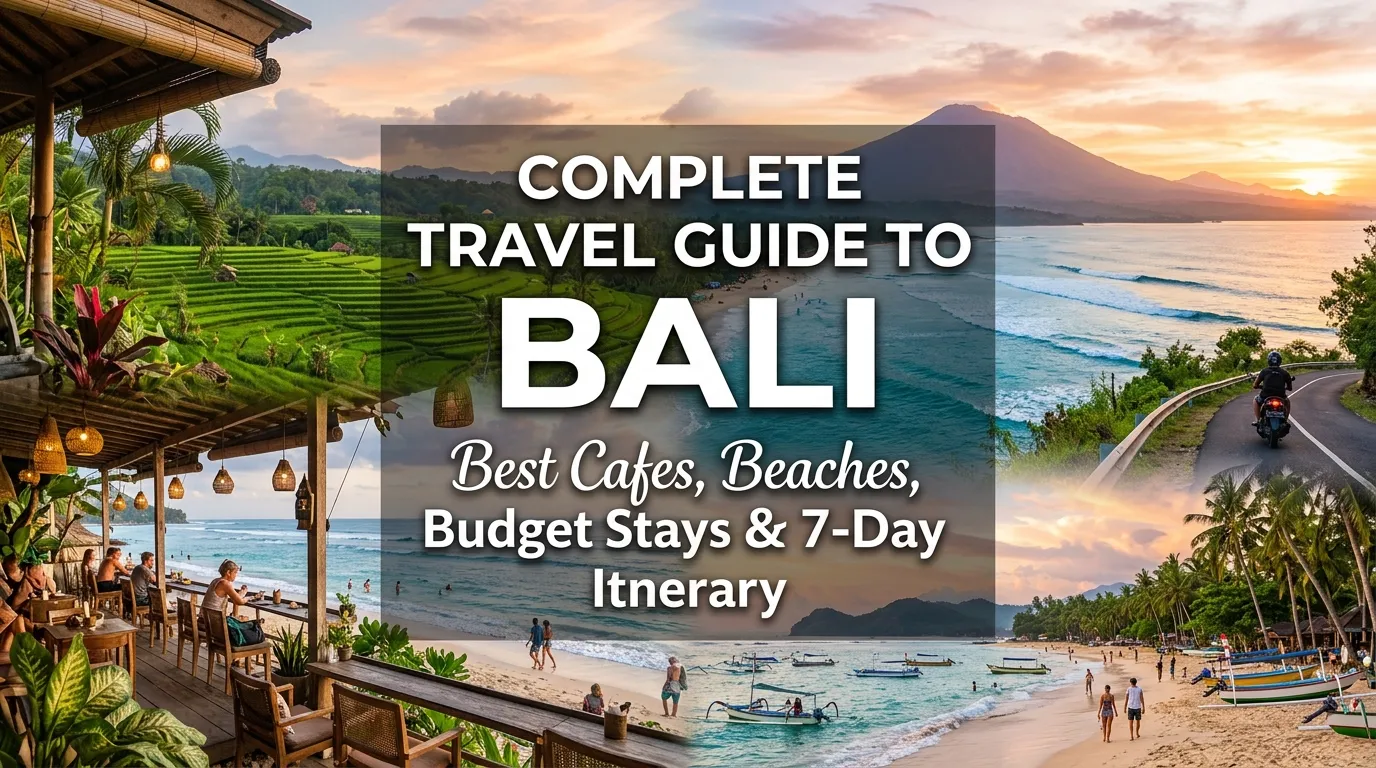
Complete Travel Guide to Bali: Best Cafes, Beaches, Budget Stays & 7-Day Itinerary
Bali is one of those destinations that almost feels too famous for its own good. You’ve probably seen the infinity pools, the jungle swings, and the beach clubs all over social media—but what most travelers don’t realize is that Bali can either feel magical or completely overwhelming depending on how you plan your trip. I’ve met people who left Bali saying it was chaotic and overrated, and others who couldn’t stop talking about how peaceful and transformative it felt. The difference usually comes down to understanding the island beyond the surface.
This complete travel guide to Bali is built to help you experience the version of Bali that most tourists miss. It’s not about chasing Instagram spots or rushing through attractions. Instead, it focuses on how to balance beaches, cafes, culture, and downtime in a way that actually makes sense for a 7-day trip. You’ll find practical advice, realistic budgets, and local insights that come from paying attention to the details—like traffic patterns, neighborhood differences, and where the real value lies.
If it’s your first time visiting Bali, this guide will save you from the most common mistakes and help you experience the island in a way that feels both relaxed and meaningful.
Quick Overview
The best time to visit Bali is during the dry season, which runs from May to September, when the weather is more predictable and humidity is lower. However, traveling in shoulder months like May or September often gives you the best balance between good weather and fewer crowds. Bali is a year-round destination, but the rainy season from November to March can affect beach plans and outdoor activities, even though it still has its own charm if you plan accordingly.
A 7-day trip is ideal for first-time visitors because it allows you to explore two to three different areas without feeling rushed. Trying to cover too much of the island in a short time is one of the biggest mistakes travelers make. Budget-wise, Bali is flexible. You can travel comfortably on $40–$70 per day if you’re careful, while mid-range travelers typically spend $80–$150 per day. Luxury experiences are surprisingly accessible compared to other destinations, often starting around $200 per day.
This trip is perfect for travelers who enjoy a mix of beaches, cafes, nature, and cultural experiences, especially those who prefer slow travel over packed itineraries.
Detailed Guide
Your Bali journey should begin in Seminyak or Canggu, depending on your preference for energy versus calm. Seminyak offers a more polished experience with beach clubs and restaurants, while Canggu feels younger, more creative, and slightly chaotic in a way that grows on you. On your first day, the goal is simple—settle in, adjust to the pace, and enjoy a sunset by the beach. Bali traffic can be unpredictable, so keeping your plans light helps you avoid unnecessary stress.
By the second day, you can start exploring the cafe culture that Bali has become famous for. Canggu, in particular, is filled with independent cafes where breakfast turns into a slow, social experience rather than a quick meal. What most people don’t know is that many of these cafes double as workspaces, making them ideal for long, relaxed mornings. Spending time here gives you a feel for the modern side of Bali, which blends global influences with local charm.
On the third day, it’s time to shift toward Ubud, the cultural and spiritual heart of the island. The drive itself can take anywhere from one to two hours depending on traffic, so starting early makes a difference. Ubud feels completely different from the coastal areas. The air is cooler, the surroundings are greener, and the pace is slower. Visiting rice terraces and small temples gives you a glimpse into Bali’s traditional side, but the real experience comes from simply being present in the environment.
Day four is where you dive deeper into Ubud’s surroundings. Exploring places like the Tegallalang Rice Terraces early in the morning helps you avoid crowds and enjoy the landscape in a more peaceful setting. One mistake I see travelers make is arriving late, when the area becomes crowded and less enjoyable. Later in the day, visiting a local market or attending a cultural performance adds another layer to your experience.
By day five, heading toward the southern beaches introduces a new side of Bali. Uluwatu is known for its dramatic cliffs and quieter beaches. The atmosphere here feels more relaxed compared to the busy areas of Seminyak and Canggu. Watching the sunset from a cliffside location is one of those moments that stays with you long after the trip ends.
Day six is perfect for beach exploration and relaxation. Bali’s beaches vary more than most people expect. Some are ideal for surfing, others for swimming, and some are simply places to sit and enjoy the view. Taking the time to explore different spots rather than sticking to one location helps you appreciate this variety.
On your final day, keeping things flexible allows you to revisit a favorite cafe, shop for local products, or simply relax before departure. Bali isn’t a place you “complete”—it’s a place you experience in layers, and leaving some things unexplored often becomes the reason to return.
Budget Breakdown
Traveling in Bali can be surprisingly affordable if you plan wisely. Transportation costs depend largely on how you choose to get around. Renting a scooter is the cheapest option at around $5–$10 per day, but it requires confidence in navigating traffic. Hiring a private driver for day trips usually costs between $30 and $50, which is often worth it for comfort and convenience. Accommodation ranges widely, with budget stays available for $15–$30 per night, while mid-range villas and boutique hotels typically cost $50–$120. Food expenses are one of Bali’s highlights, as you can enjoy high-quality meals for $5–$15 in local cafes. Activities such as temple visits, tours, and experiences usually fall between $10 and $40. Overall, a 7-day trip can cost anywhere from $300 for budget travelers to $1200 or more for a more comfortable experience.
Where to Stay
Choosing where to stay in Bali can define your entire trip. Budget travelers often find great value in guesthouses or homestays, which offer basic comfort and a more personal experience. Mid-range travelers tend to prefer boutique hotels or private villas, many of which come with pools and unique designs at surprisingly reasonable prices. Luxury travelers will find no shortage of high-end resorts, particularly in areas like Uluwatu and Seminyak, where ocean views and premium amenities create a more indulgent experience. One important thing to consider is location, as staying in multiple areas during your trip can help you experience different sides of Bali without long daily commutes.
Food and Local Experiences
Bali’s food scene is one of its strongest attractions, and it goes far beyond traditional Indonesian dishes. The cafe culture, especially in Canggu and Ubud, blends global influences with local ingredients, creating meals that are both creative and satisfying. Fresh smoothie bowls, artisan coffee, and beautifully presented brunch dishes have become part of the island’s identity. At the same time, local warungs offer authentic Indonesian food at a fraction of the price, providing a completely different but equally valuable experience.
Most people don’t know this, but some of the best meals in Bali come from small, family-run places rather than popular restaurants. Taking the time to explore these spots gives you a deeper connection to the local culture. Food in Bali isn’t just about eating—it’s about slowing down, enjoying the atmosphere, and being part of the environment.
Travel Tips
Bali is easy to navigate once you understand a few key things. Traffic can be unpredictable, especially in areas like Canggu and Seminyak, so planning your movements during off-peak hours saves time and frustration. One mistake I see travelers make is trying to visit too many places in a single day, which often leads to spending more time in traffic than actually exploring.
Safety in Bali is generally good, but being aware of your surroundings is still important. If you plan to rent a scooter, wearing a helmet and having basic riding experience is essential. Another tip that many travelers overlook is carrying small cash, as not all places accept cards. Staying hydrated and using sunscreen regularly is also important due to the tropical climate.
How to Reach
Bali is accessible via Ngurah Rai International Airport, which serves as the main gateway to the island. Direct and connecting flights are available from major cities around the world, including convenient connections from India and Southeast Asia. From the airport, reaching your accommodation typically takes between 30 minutes to over an hour depending on traffic and location. Pre-booking a transfer or using a reliable taxi service helps avoid confusion upon arrival.
FAQs
First-time travelers often ask whether 7 days is enough for Bali, and while it doesn’t cover everything, it’s enough to experience the island’s key highlights without rushing. Another common question is whether Bali is expensive, and the answer depends entirely on your travel style, as it can be both budget-friendly and luxurious. Many visitors wonder if renting a scooter is necessary, and while it offers flexibility, it’s not essential if you prefer hiring drivers. Questions about safety are common, and while Bali is generally safe, basic precautions are always recommended. Travelers also often ask about the best area to stay, and the answer depends on whether you prefer beaches, cafes, or cultural experiences.