




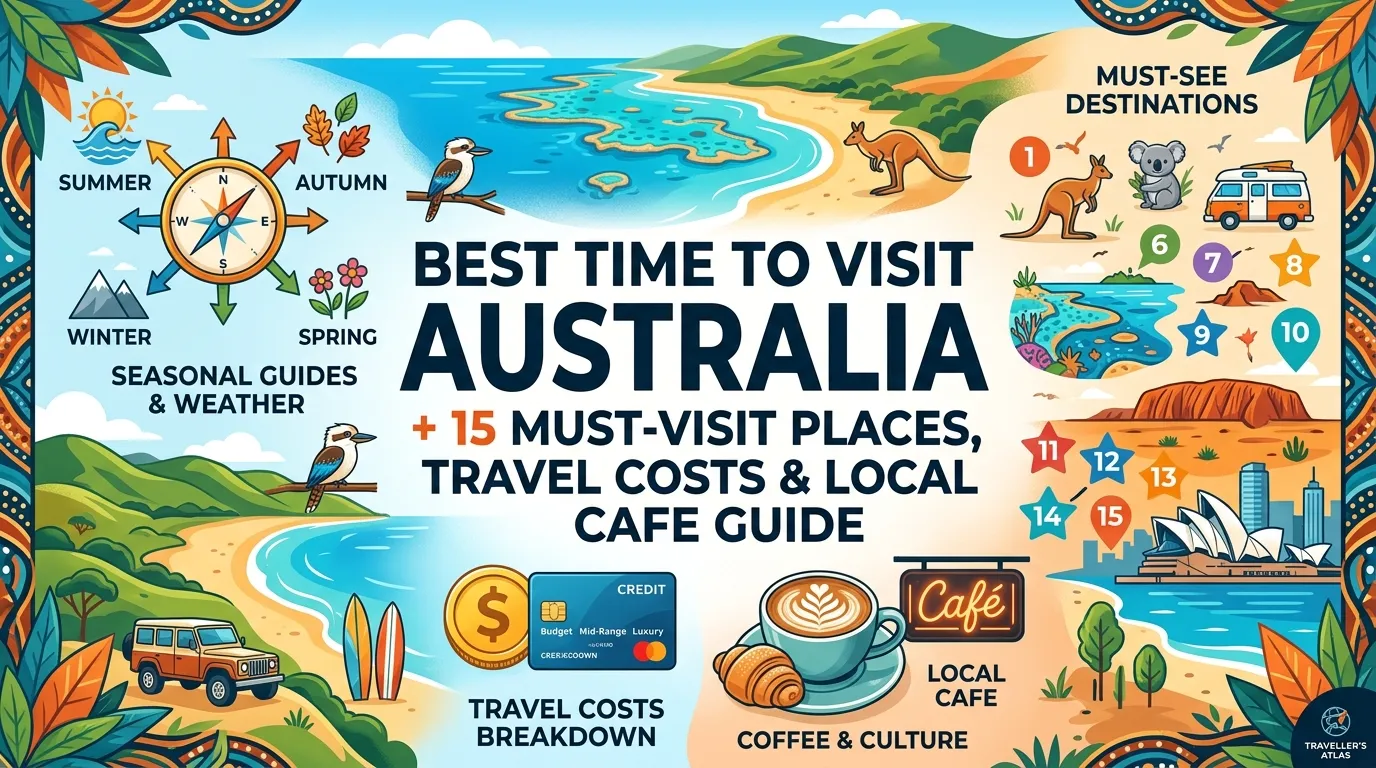
Best Time to Visit Australia + 15 Must-Visit Places, Travel Costs & Local Cafe Guide
Australia isn’t the kind of destination you can “figure out” in a quick Google search. It’s too big, too diverse, and honestly, too misunderstood. I’ve seen travelers plan their trips based on a single season or a viral Instagram spot, only to end up visiting the wrong region at the wrong time of year. The result? Unexpected weather, missed experiences, and a trip that doesn’t quite live up to expectations.
This guide is built differently. Instead of giving you a generic list of places or a one-size-fits-all travel plan, this article breaks down the best time to visit Australia, along with a deeply practical look at where to go, how much it costs, and how to experience the country like someone who actually understands it. From coastal cities to outback landscapes, and from high-end dining to hidden local cafes, this isn’t about ticking off landmarks—it’s about traveling smarter.
If you’re planning your first trip to Australia, this guide will help you avoid the biggest mistakes and make decisions that actually match your travel style.
Quick Overview
Australia’s seasons are the opposite of what many travelers expect, especially if you’re coming from the Northern Hemisphere. Summer runs from December to February, autumn from March to May, winter from June to August, and spring from September to November. But here’s what most people don’t know—Australia doesn’t have one consistent climate. The north is tropical, the south is temperate, and the interior is dry and unpredictable. That’s why timing your visit depends more on where you plan to go than just the month you choose.
The ideal trip duration is at least 10 to 14 days, but even that only scratches the surface. If you want to explore multiple regions without feeling rushed, you’ll need closer to three weeks. Budget-wise, Australia is not cheap, and pretending otherwise will only lead to poor planning. A realistic daily budget starts at around $100 for budget travelers, moves to $150–$250 for mid-range comfort, and can easily exceed $300 if you prefer premium experiences.
This trip is perfect for travelers who enjoy nature, road trips, beaches, and city life combined. It’s also ideal for those who are willing to plan carefully and prioritize experiences over rushing between destinations.
Detailed Guide
Understanding the best time to visit Australia starts with breaking the country into regions rather than treating it as a single destination. For example, visiting northern Australia during the wet season between November and April can lead to heavy rains, humidity, and even restricted access to certain areas. On the other hand, southern cities like Sydney and Melbourne are at their best during spring and autumn, when the weather is mild and the crowds are manageable.
If you’re planning a classic first-time trip, you’ll likely start with Sydney. This city offers a balanced introduction to Australia, combining beaches, urban culture, and iconic landmarks. Spending a few days here allows you to adjust to the pace of the country while exploring areas beyond the obvious spots. Most travelers visit the Opera House and Harbour Bridge, but what stays with you longer are the coastal walks, especially from Bondi to Coogee, where the ocean constantly shifts in color and energy.
Moving south, Melbourne offers a completely different vibe. It’s more about culture, coffee, and creativity. What surprised me most here wasn’t the landmarks—it was the cafe culture. Coffee isn’t just a drink in Melbourne; it’s part of daily life. Walking through laneways and discovering small, independent cafes feels more authentic than visiting any major attraction. One mistake I see travelers make is underestimating how much time they’ll want to spend just exploring these neighborhoods.
If you continue along the coast, the Great Ocean Road becomes one of the most memorable drives in the country. The landscape constantly changes, from rugged cliffs to quiet beaches, and the journey itself becomes more important than the stops. Planning this drive requires attention to timing, as doing it in a single rushed day takes away from the experience.
Heading inland, places like Uluru offer a completely different perspective of Australia. The vastness of the outback, the changing colors of the rock formations at sunrise and sunset, and the silence of the desert create a contrast that many travelers aren’t prepared for. Visiting this region is best between May and September, when temperatures are more manageable.
On the western side, Perth often gets overlooked, but that’s part of its charm. It’s less crowded, more relaxed, and offers access to some of the cleanest beaches in the country. Nearby islands like Rottnest provide a quieter escape where time seems to slow down.
If your trip includes tropical experiences, the Great Barrier Reef near Cairns is a must. However, timing is crucial here. Visiting during the dry season between May and October gives you clearer water and better conditions for snorkeling or diving. Many travelers don’t realize that weather conditions can significantly affect visibility, which directly impacts the experience.
Across all these regions, what stands out is how different each part of Australia feels. It’s not just a change in scenery—it’s a shift in rhythm, culture, and even daily habits. That’s why planning your route carefully matters more than trying to see everything.
Budget Breakdown
Traveling across Australia requires a realistic understanding of costs, especially when it comes to transportation. Domestic flights are often necessary due to the vast distances, and booking these in advance can save a significant amount of money. A single domestic flight can range between $80 and $200 depending on the route and timing. Accommodation varies widely, with budget hostels starting around $30–$50 per night, while mid-range hotels typically fall between $100 and $180. Food expenses can also add up quickly if you rely on restaurants for every meal, but mixing in local cafes and takeaway options helps manage costs. Activities such as reef tours or guided experiences can range from $50 to $200, depending on the location. Overall, a 10 to 14-day trip can cost anywhere from $1500 for budget travelers to over $4000 for those seeking more comfort and flexibility.
Where to Stay
Accommodation in Australia is less about luxury and more about location. Budget travelers often rely on hostels or shared accommodations, which are widely available in major cities and tourist areas. Mid-range travelers tend to prefer boutique hotels or serviced apartments, which offer more privacy without a significant jump in cost. Luxury travelers will find high-end hotels in cities like Sydney and Melbourne, often with views that justify the price. One thing worth noting is that staying slightly outside the main tourist areas can significantly reduce costs while offering a more local experience. Many neighborhoods just a short train ride away from city centers provide better value and a quieter atmosphere.
Food and Local Experiences
Australia’s food scene is shaped by its diversity, and that becomes clear the moment you start exploring beyond mainstream restaurants. The cafe culture, particularly in Melbourne, is something you don’t fully understand until you experience it. Coffee here is taken seriously, and even the smallest cafes often serve better coffee than high-end establishments elsewhere. Brunch culture is equally strong, with menus that blend international influences and fresh local ingredients.
In coastal areas, seafood becomes a highlight, often served simply but with exceptional quality. In cities, multicultural influences bring a mix of Asian, European, and Middle Eastern flavors that reflect Australia’s evolving identity. Most people don’t know this, but some of the best meals you’ll have will come from small, unassuming places rather than highly rated restaurants. It’s worth stepping away from crowded areas and trusting local recommendations.
Travel Tips
Australia rewards travelers who plan ahead but stay flexible. One important thing to understand is the scale of the country—distances are much larger than they appear on a map. Trying to cover too many locations in a short time often leads to exhaustion rather than enjoyment. Another common mistake is underestimating weather differences between regions, which can completely change your experience if not considered.
Safety is generally not a major concern, but awareness is still important, especially in natural environments where conditions can change quickly. Carrying sunscreen, staying hydrated, and respecting local guidelines are essential, particularly in remote areas. Public transport in cities is reliable, but renting a car becomes necessary for exploring coastal routes and less accessible regions.
How to Reach
Australia is primarily accessed through international flights, with major entry points including Sydney, Melbourne, and Brisbane. From India and other parts of Asia, direct and connecting flights are available, typically taking between 12 and 16 hours depending on the route. Once inside the country, domestic flights are the fastest way to travel between cities due to the large distances involved. Trains and buses exist but are more suitable for shorter routes or specific travel experiences. Planning your arrival city based on your itinerary can save both time and money.
FAQs
Travelers often ask when the best time to visit Australia is, and the answer depends on the regions you plan to explore rather than a single season. Another common question is whether Australia is expensive, and while it can be, careful planning and smart choices make it manageable. Many first-time visitors wonder if they need to rent a car, and while it’s not necessary in cities, it becomes highly recommended for road trips and regional exploration. Questions about safety usually come up, and while cities are generally safe, natural environments require respect and preparation. Finally, travelers often ask how much time they need, and the honest answer is that more time always leads to a better experience in a country this vast.