




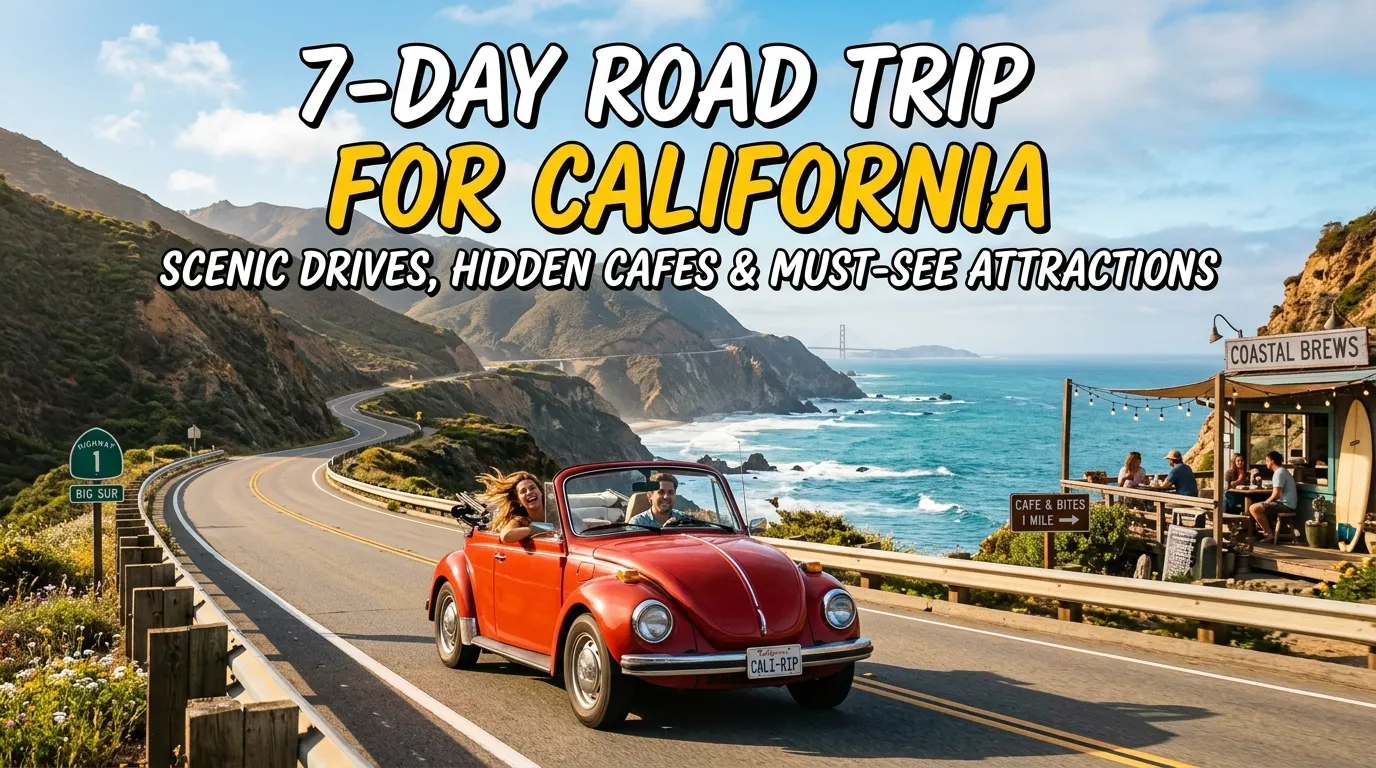
7-Day Road Trip Itinerary for California: Scenic Drives, Hidden Cafes & Must-See Attractions
California road trips have a reputation for being cinematic—and for good reason. The coastline feels endless, the landscapes keep changing, and every few miles there’s something that makes you want to pull over and just take it in. But here’s the truth most guides don’t tell you: a California road trip can either feel like a dream or like a stressful race against time.
I’ve seen travelers try to squeeze Los Angeles, San Francisco, Yosemite, and everything in between into a few days, only to spend more time driving than actually experiencing anything. This 7-day road trip itinerary for California is designed differently. It focuses on a realistic route, balanced driving hours, and experiences that actually stay with you—coastal drives, hidden cafes, and stops that don’t always show up in popular itineraries.
If you want a road trip that feels smooth, memorable, and genuinely enjoyable instead of rushed and exhausting, this guide will help you get there.
Quick Overview
The best time to plan a California road trip is between April and June or September to October, when the weather is pleasant and the crowds are more manageable. Summer can be beautiful, but it also brings heavy traffic along popular routes like the Pacific Coast Highway, which can significantly slow down your journey. A 7-day trip is ideal if you focus on one main route rather than trying to cover the entire state. Budget-wise, California can vary widely, but a realistic daily spend ranges from $100 for budget travelers to $250 or more for mid-range comfort, especially when you factor in car rental and fuel. This itinerary is perfect for couples, solo travelers, or small groups who enjoy scenic drives, coastal towns, and a mix of city and nature experiences.
Detailed Guide
Your road trip begins in San Francisco, a city that feels like the perfect starting point because it immediately sets the tone. The cool breeze, the hills, and the iconic skyline make you slow down whether you want to or not. On your first day, instead of rushing into tourist-heavy activities, spend time exploring neighborhoods like Mission District or walking along the waterfront near Fisherman’s Wharf. Most people head straight to the major attractions, but taking a slower approach on day one helps you adjust and actually enjoy the city rather than just ticking boxes.
By day two, you begin your drive south along the legendary Pacific Coast Highway. This stretch is often talked about, but what many travelers underestimate is how frequently you’ll want to stop. The drive itself becomes the experience. Passing through areas like Half Moon Bay and Santa Cruz introduces you to quieter coastal vibes before reaching Monterey. This is where the road trip starts to feel real. The ocean feels closer, the air changes, and the pace naturally slows.
Continuing into Carmel-by-the-Sea, you’ll notice a shift in atmosphere. This small town has a charm that feels almost unreal, with its cottage-style buildings and quiet streets. It’s one of those places where you don’t need an itinerary—just walking around becomes the highlight. Most people don’t know this, but some of the best cafes and bakeries here are hidden slightly away from the main street, and they’re worth seeking out.
Day three is where the road trip truly becomes unforgettable as you drive through Big Sur. This stretch of coastline is often considered one of the most beautiful in the world, and for good reason. Cliffs drop dramatically into the ocean, and every turn feels like a postcard. However, one mistake I see travelers make is trying to rush through Big Sur to reach their next destination. This is the part of the journey where you should slow down the most. Stops like Bixby Bridge and McWay Falls are well-known, but even pulling over at random viewpoints often leads to equally stunning views.
By day four, you arrive in San Luis Obispo or nearby coastal towns. This part of the trip feels more relaxed, with fewer crowds and a more local atmosphere. It’s a good place to take a break from driving and enjoy a slower day. Visiting local cafes here offers a completely different experience compared to larger cities, often with more personal service and unique menus.
Continuing south on day five, you’ll pass through Santa Barbara, which blends coastal beauty with a Mediterranean feel. The architecture, the beaches, and the laid-back vibe make it an ideal stop before heading into the busier part of the journey. Spending a few hours here gives you a sense of how diverse California’s coastal towns can be.
By day six, you reach Los Angeles, which feels like a completely different world compared to where you started. The scale of the city can be overwhelming at first, but focusing on a few key areas like Santa Monica or Venice Beach helps make it manageable. Walking along the beach at sunset or exploring the boardwalk gives you a more relaxed experience compared to navigating busy urban streets.
Your final day can be spent revisiting a favorite spot or exploring something you missed. This flexibility is important because road trips rarely go exactly as planned, and having space to adjust makes the experience feel more natural.
Budget Breakdown
A California road trip requires careful budgeting, especially when it comes to transportation. Renting a car typically costs between $40 and $80 per day depending on the type of vehicle and booking time, while fuel expenses can add another $50–$100 over the course of the trip. Accommodation varies widely, with budget motels starting around $70 per night and mid-range hotels ranging between $120 and $200. Food costs depend on your choices, but mixing casual dining with occasional cafe visits can keep daily expenses around $20–$50. Activities along this route are often low-cost or free, as the main attraction is the drive itself. Overall, a 7-day road trip can cost between $800 and $2000 depending on your travel style.
Where to Stay
Accommodation along this route is less about luxury and more about location. Budget travelers often rely on motels or small inns, which are widely available along the coast. Mid-range travelers might prefer boutique hotels or Airbnb stays that offer more comfort and character. Luxury travelers will find high-end resorts in areas like Big Sur and Santa Barbara, where the views alone justify the price. One important thing to keep in mind is booking in advance, especially during peak travel seasons, as availability along the coast can fill up quickly.
Food and Local Experiences
One of the most underrated parts of a California road trip is the cafe culture. Small coastal towns often have independent cafes that focus on fresh ingredients and simple, well-made food. Stopping for breakfast or coffee in these places becomes part of the journey rather than just a necessity. Seafood also plays a major role, especially in coastal areas where freshness makes a noticeable difference.
Most people don’t realize this, but some of the best food experiences happen when you step away from popular tourist spots. Asking locals for recommendations or simply choosing a place that feels authentic often leads to better meals than following online rankings.
Travel Tips
Planning a California road trip requires more flexibility than strict scheduling. Traffic conditions, weather changes, and unexpected stops can all affect your timing. One mistake I see travelers make is underestimating driving times, especially along coastal routes where speeds are slower and stops are frequent.
Safety is generally not a concern, but staying alert while driving is essential, particularly on winding roads like those in Big Sur. Keeping your fuel tank at least half full is also a good practice, as gas stations can be limited in certain stretches.
Another important tip is to start your drives early in the day. This not only helps you avoid traffic but also gives you better lighting for views and photos.
How to Reach
Most travelers begin their California road trip by flying into San Francisco International Airport or Los Angeles International Airport, depending on their route. Starting in San Francisco and ending in Los Angeles is a popular choice because it allows you to drive along the coast without backtracking. Renting a car directly from the airport is the most convenient option, and booking in advance often results in better rates.
FAQs
Travelers often ask whether 7 days is enough for a California road trip, and the answer depends on your route, but focusing on the coastal drive makes it achievable. Another common question is about the best direction to travel, and driving from north to south is generally preferred for better coastal views. Many people also wonder if the drive is difficult, and while some sections require attention, it’s manageable for most drivers. Budget concerns are common, but with careful planning, the trip can be adapted to different price ranges. Finally, travelers often ask about must-see stops, and while there are many, the journey itself is just as important as the destinations.