



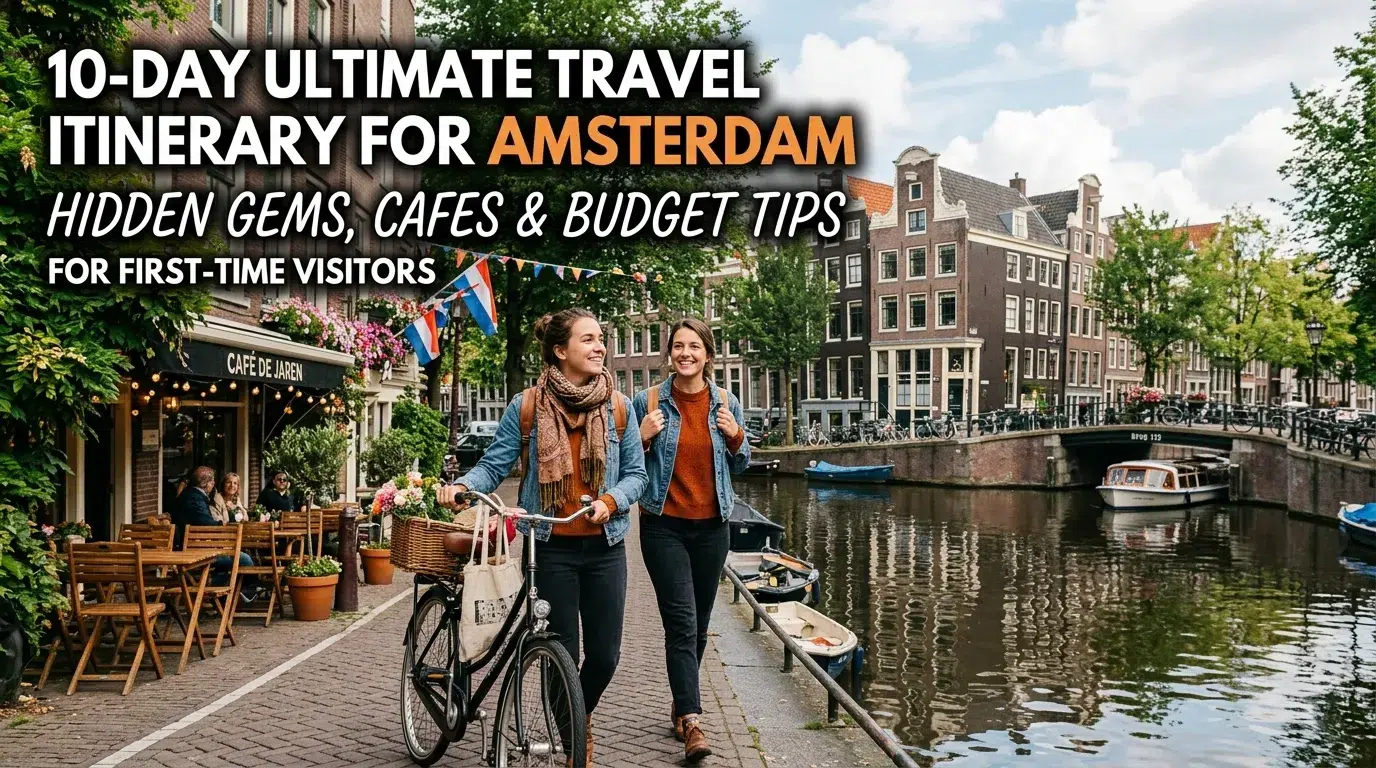
10-Day Ultimate Travel Itinerary for Amsterdam: Hidden Gems, Cafes & Budget Tips for First-Time Visitors
Amsterdam isn’t a city you should rush—and that’s exactly where most travelers go wrong. They land, tick off a few museums, snap photos of canals, and leave thinking they’ve “done” Amsterdam. But the truth is, this city reveals its charm slowly. It’s in the quiet morning bike rides, the tucked-away cafes, the neighborhoods that don’t show up on Instagram reels.
This 10-day ultimate travel itinerary for Amsterdam is built for travelers who want more than just surface-level sightseeing. It’s based on a slower, more immersive way of exploring—one that helps you understand how the city breathes. Instead of overwhelming you with checklists, this guide focuses on real experiences, practical planning, and honest insights you won’t usually find in generic travel blogs.
If it’s your first time visiting Amsterdam, this itinerary will help you avoid the common traps, manage your budget wisely, and discover corners of the city most tourists completely miss.
Quick Overview
The best time to visit Amsterdam depends on what kind of experience you’re after, but if you want the city at its most vibrant without overwhelming crowds, April to May is ideal because of the tulip season and pleasant weather. September to October is another underrated window when the summer rush fades, prices stabilize slightly, and the city feels more local again. While many travelers try to squeeze Amsterdam into a weekend, the ideal duration is at least 7 to 10 days if you truly want to experience it beyond the obvious highlights. In terms of budget, a daily spend can range anywhere between $70 for budget travelers who rely on hostels and street food, up to $250 or more if you prefer comfort and premium experiences. This itinerary is perfect for first-time visitors, solo travelers, couples, and especially those who enjoy cafe culture, walking cities, and slow travel rather than rushed sightseeing.
Detailed Guide
Your first day in Amsterdam should not feel like a race. After arriving and settling into your accommodation, the best thing you can do is step outside without a rigid plan. Walk toward the canal belt from the central area and simply observe. The narrow houses leaning slightly forward, the reflections on the water, and the rhythm of cyclists passing by create a first impression that no guided tour can replicate. Most people underestimate how tiring travel can be, so instead of pushing yourself into museums or attractions on day one, allow your body to adjust. Grab a light meal at a canalside cafe and let the city introduce itself at its own pace.
By the second day, you can step into the more iconic side of Amsterdam, but even here, strategy matters. Visiting places like the Anne Frank House requires advance planning, as tickets often sell out weeks ahead. Walking through Jordaan afterward offers a softer contrast to the emotional intensity of the museum, with its quiet streets and local charm. Later in the day, heading toward Museumplein gives you access to major institutions like the Rijksmuseum, but it’s important not to overdo it. One mistake I see travelers make often is trying to cover multiple museums in a single day, which quickly turns into exhaustion instead of enjoyment. Limiting yourself to one major museum allows you to actually absorb what you’re seeing.
Around the third day, you should consider renting a bicycle, because Amsterdam changes completely when you see it from a local’s perspective. At first, the traffic of cyclists may feel intimidating, but within a short time, it becomes intuitive. Riding through Vondelpark into neighborhoods like Oud-West and De Pijp introduces you to a side of the city that feels more residential and authentic. These areas are filled with small cafes, independent shops, and local markets that don’t cater specifically to tourists. This is where you begin to feel less like a visitor and more like someone temporarily living in the city.
Day four is where you intentionally slow things down. Amsterdam’s cafe culture is not about rushing in and out—it’s about sitting, observing, and taking your time. Instead of hopping between attractions, spend a few hours in a thoughtfully chosen cafe, try freshly made stroopwafels, and notice how locals interact with the space. Most people don’t realize this, but some of the most memorable travel moments come from doing very little, just in the right place.
A short day trip on the fifth day adds variety to your itinerary. Visiting nearby locations like Zaanse Schans offers a glimpse into traditional Dutch life, with windmills, wooden houses, and local crafts. The journey itself is simple and relatively inexpensive, making it a worthwhile break from the city without requiring extensive planning. However, timing matters here—arriving early helps you avoid the heavy flow of tour groups that tend to arrive mid-morning.
By day six, you’re ready to explore a different side of Amsterdam that many tourists never see. Crossing over to Amsterdam Noord via the free ferry from Centraal Station introduces a more experimental and creative environment. Industrial spaces transformed into art hubs, street murals, and waterfront cafes give this area a completely different energy compared to the historic center. It’s less polished, but that’s exactly what makes it interesting.
Day seven naturally becomes about food and local interaction. Visiting markets like Albert Cuyp is not just about eating—it’s about understanding daily life in Amsterdam. Street food here is affordable, diverse, and often more authentic than restaurant offerings. Trying local snacks like herring or bitterballen may feel unfamiliar at first, but they’re part of the cultural experience. Foodhallen, on the other hand, offers a more curated indoor setting where you can explore multiple cuisines in one place.
A canal cruise on day eight might sound like a typical tourist activity, but when done right, it’s worth it. The key is choosing smaller boats that provide a quieter and more intimate experience instead of large crowded ones. Seeing the city from the water gives you a new perspective on its layout and architecture. As evening falls, walking along the illuminated canals creates a completely different atmosphere compared to daytime exploration.
Day nine is intentionally left flexible because by now, you’ll have developed your own connection with the city. This is the day to revisit a place you liked, discover a new corner, or simply sit by a canal and reflect. These unscripted moments often become the most meaningful part of the trip.
On your final day, keep things light and practical. Explore local shopping streets like the Nine Streets area, pick up unique souvenirs, and allow enough time to reach the airport without stress. Amsterdam’s airport can be unpredictable in terms of queues, so planning ahead makes a big difference.
Budget Breakdown
Traveling in Amsterdam doesn’t have to drain your savings, but it does require awareness. Accommodation will likely be your biggest expense, with budget options ranging between $40 and $80 per night if you’re comfortable with hostels or shared spaces, while mid-range hotels typically fall between $100 and $180. Food can be surprisingly manageable if you balance dining out with local markets and quick meals, keeping your daily spend around $15 to $40 depending on your choices. Transportation is efficient, and investing in a multi-day public transport pass or renting a bicycle can significantly reduce costs. Activities such as museums and canal cruises are priced moderately, but these can add up if you try to do everything. Overall, a 10-day trip can cost anywhere from $700 for a budget traveler to over $2500 for a more comfortable experience.
Where to Stay
Choosing where to stay in Amsterdam can shape your entire experience. Budget travelers often find good options in hostels located slightly outside the central tourist zones, where prices are lower and the environment feels more relaxed. Mid-range travelers might prefer boutique hotels or small apartments in neighborhoods like De Pijp, which offer a balance between accessibility and local atmosphere. For those seeking luxury, canal-facing hotels in the historic center provide stunning views and premium comfort, though they come at a higher price. One mistake many travelers make is booking accommodation too close to Dam Square, assuming it’s convenient, but the noise and crowds can quickly become overwhelming.
Food and Local Experiences
Amsterdam’s food scene is often underestimated, but it quietly offers a mix of traditional Dutch flavors and international influences. Fresh stroopwafels made right in front of you taste completely different from packaged ones, and Dutch apple pie served in small cafes has a homemade quality that’s hard to replicate elsewhere. Local snacks like bitterballen may seem simple, but they’re deeply rooted in Dutch culture. Beyond the food itself, the experience of eating matters just as much. Sitting by a canal, watching boats pass by, or starting your morning in a quiet bakery adds depth to the trip. Some of the best meals you’ll have won’t come from highly rated restaurants, but from small places you stumble upon while exploring.
Travel Tips
Amsterdam is a relatively easy city to navigate, but a few insights can make your trip smoother. One thing many travelers don’t realize is that tap water is perfectly safe to drink, so carrying a reusable bottle can save money over time. Another common mistake is accidentally walking in bike lanes, which can lead to some uncomfortable moments with fast-moving cyclists. Safety-wise, the city is generally secure, but crowded areas can attract pickpockets, so staying aware of your belongings is important. Cash is becoming less common, and many places prefer card payments, so relying on a contactless card is the smartest approach. Using offline maps can also be helpful, especially when your internet connection is unreliable.
How to Reach
Amsterdam is well-connected internationally, making it easy to access from almost anywhere. Most travelers arrive via Amsterdam Airport Schiphol, which is located just 15 to 20 minutes from the city center by train. The connection is efficient and frequent, so there’s no need to rely on expensive taxis. If you’re traveling within Europe, trains offer a comfortable and scenic option, connecting Amsterdam to cities like Paris, Brussels, and Berlin. Budget travelers might consider long-distance buses, which are cheaper but require more time. Regardless of how you arrive, reaching the city center is straightforward and doesn’t require complicated planning.
FAQs
First-time visitors often wonder whether 10 days in Amsterdam is too long, but the reality is that this duration allows you to explore at a comfortable pace while including day trips and local experiences. While the city has a reputation for being expensive, it becomes manageable with smart planning and a mix of budget-friendly choices. English is widely spoken, so communication is rarely an issue for international travelers. Cycling is not mandatory, but it adds a unique dimension to your experience and is worth trying at least once. When it comes to choosing where to stay, neighborhoods like Jordaan and De Pijp offer a more balanced and enjoyable environment compared to heavily crowded central areas.